
technology
How Augmented Reality is Changing Ring Selection
The case for trying a ring on your hand before it exists — how AR is closing a gap that catalogues, photographs and renders never quite managed to close.
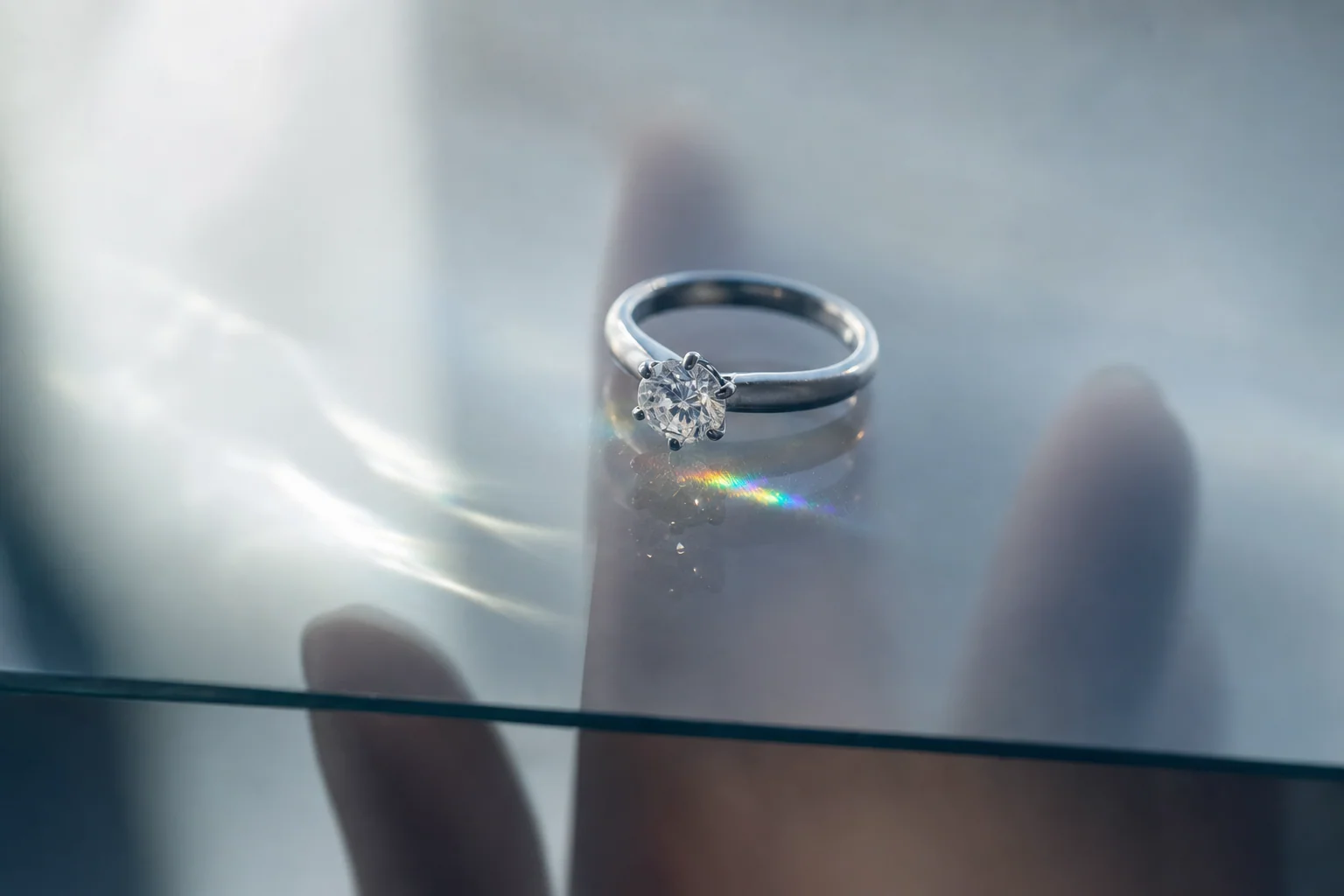
For most of fine jewellery’s history, the moment of trying a ring on your hand happened once: in person, at a counter, with a single physical sample. If you wanted to consider variations — a wider band, a different stone, a longer cushion versus a shorter one — you waited for new samples or trusted a sketch. Augmented reality, finally robust on consumer hardware, changes the geometry of that decision. This piece explains what AR actually does in ring selection, what it doesn’t, and where it fits in an atelier workflow.
What the technology is doing
Modern AR libraries can track a hand at video frame rates with millimetric accuracy. The system identifies the wearer’s hand, locates the finger, scales a 3D model of the proposed ring to the correct size, and renders it in real lighting from the device’s camera feed. The result on screen looks like a photograph: the ring sits on the hand, catches the room’s light, moves when the hand moves.
The 3D model that gets rendered is the same one the atelier produced for the commission. Same gemstone proportions, same prong angles, same band profile. What the wearer sees in AR is, very nearly, what will eventually arrive as a finished piece.
What this closes
The historic gap in custom commissions is the time between approving a design and seeing the result. A piece that takes six to eight weeks in the atelier should not arrive as a surprise. The wearer has been imagining it for months; the maison has been producing it. AR lets both sides converge on the same image before the physical work begins.
This matters most for two decisions:
Stone shape. A cushion is not an oval is not a round. Photographs of stones rarely communicate how each shape sits on a specific hand at scale. AR shows it — at the wearer’s actual proportions, with the wearer’s actual skin tone in frame.
Band proportion. A 2.2 mm band on a slim hand reads delicate; a 2.2 mm band on a wider hand reads dainty. The right band width for a hand is best decided by seeing it on that hand, not by reading a number on a spec sheet.
What AR doesn’t replace
A device screen is not the same as physical wear. AR shows you what the piece looks like; it doesn’t show you what the piece feels like — the weight of the metal, the way a stone catches sunlight from an angle the device camera can’t reproduce, the small motions of the ring as your finger moves through ordinary activities.
Wearers who only ever see the ring in AR will still be surprised — often pleasantly — by the physical piece. The metal is heavier than the screen suggests. The stone sparkles in more registers than the algorithm renders. The piece is more of an object than a digital twin can communicate.
AR is the bridge between approval and production. It is not a replacement for the moment of receiving the ring.
Where AR fits in the workflow
In an ÊTRUNE commission, AR enters at two specific moments:
Before approval. Once the 3D model is signed off conceptually, the wearer reviews it in AR on their hand. Adjustments still happen at this stage — slightly slimmer band, slightly different prong height, alternate stone shape from a curated short list. Each adjustment generates a new model, viewable again in AR.
After approval, before production. A final AR review confirms that what was approved is what the wearer expected. This is the last gate before the atelier begins the lost-wax process. Once the model goes into wax, structural changes restart the timeline.
After production, AR has done its job. The piece exists.
What this means for shopping engagement rings remotely
The internet never quite solved jewellery shopping. Photographs flatter or under-represent stones; renders look CGI; videos help but don’t approximate the moment-of-decision feeling of seeing the object on your own hand. This is why fine jewellery has remained, for decades, a stubbornly in-person purchase.
AR begins to change that geometry. A wearer in New York can review a piece designed in Bogotá at scale, in their own home, on their own hand. The maison can produce the piece with confidence that the brief was understood. The certificate, the ÊTRUNE ID record, and the eventual +Care rhythm all proceed as they would have in person.
We will continue to encourage in-boutique visits when the wearer is near one. When they are not, AR closes most of the gap.
What we don’t use it for
AR is not a marketing gimmick. We don’t render rings on stock hands. We don’t generate promotional videos that make stones look more saturated than they are. The wearer sees their actual hand with the actual proposed piece at the actual scale.
We also don’t use AR to push wearers toward upsells. The system shows what was specified. If the wearer wants to explore alternatives, the conversation reopens at the design level — not by toggling features in the AR view.
The technology serves the commission. The commission is the work.
A short reference
- What AR does: real-time rendering of the proposed ring on the wearer’s hand, at correct scale, in real lighting.
- When it enters: after the 3D model is built, before the atelier begins production.
- What it shows: stone shape, band proportion, setting profile, finger placement.
- What it does not show: physical weight, the full optical behaviour of fine gemstones, the feel of metal against skin.
- Where it fits: between design approval and production, especially for remote commissions.
A ring you have already worn — even virtually — arrives differently than a ring you have only imagined.