
CARE GUIDE
How to wear ÊTRUNE every day.
Between annual visits to the atelier, the piece lives with you. A few small rituals keep it at its best — and a few small habits to avoid keep it from arriving at +Care needing more than it should.
Daily wear.
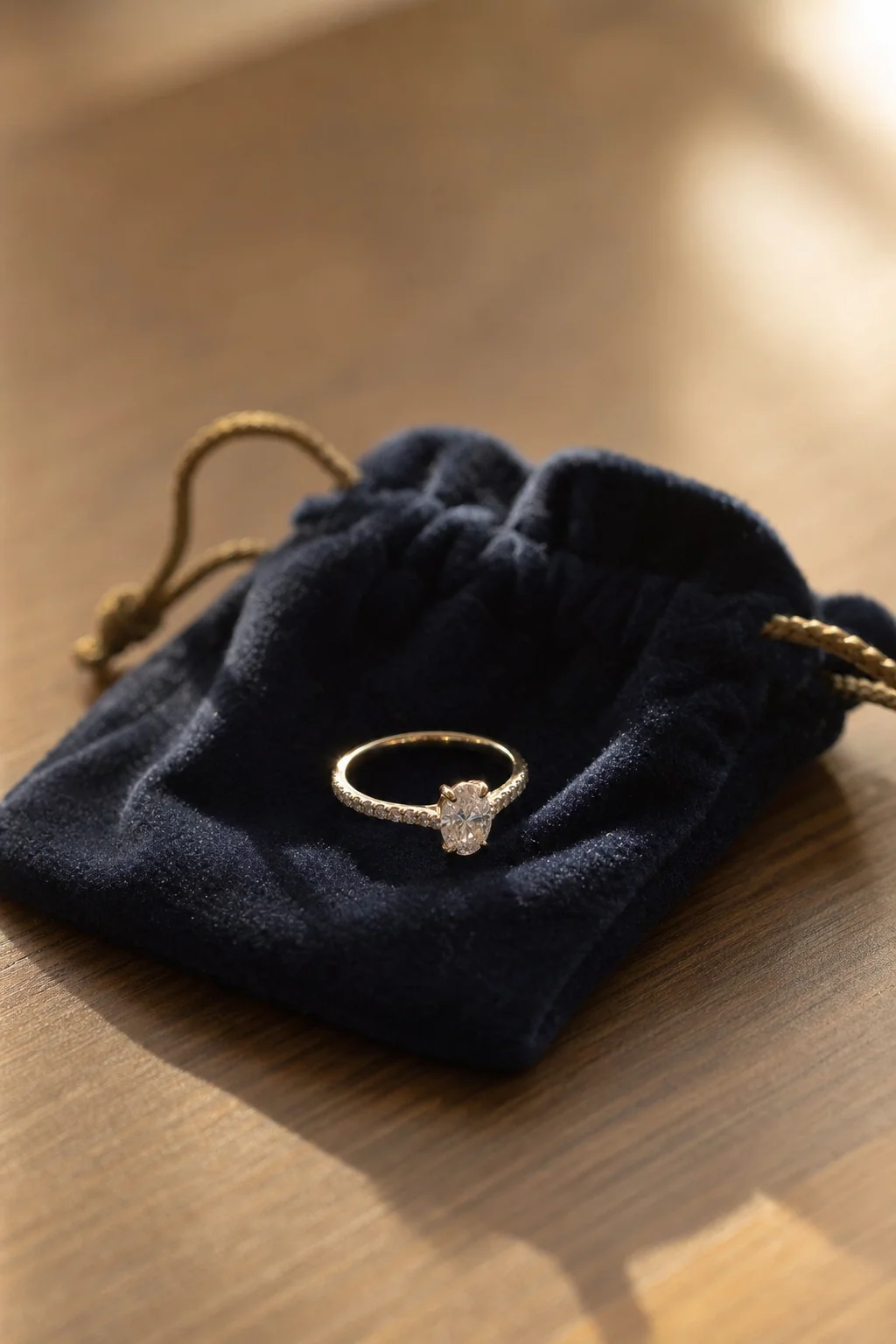
The piece is built to be worn — that is its job, and it does it well. There is no need to take it off for ordinary daily life: writing, typing, walking, reading. Light hand-washing is fine. Wearing it through your day is the entire point of an everyday ring.
There are a few situations to avoid. Take the piece off before activities that involve impact — sport, lifting, heavy gardening. Take it off before contact with chlorine, household cleaners or strong perfumes. Take it off when applying sunscreen, hand cream or any thick cosmetic. None of these will ruin the ring immediately; all of them will cost some of its brilliance over time.
Cleaning at home.
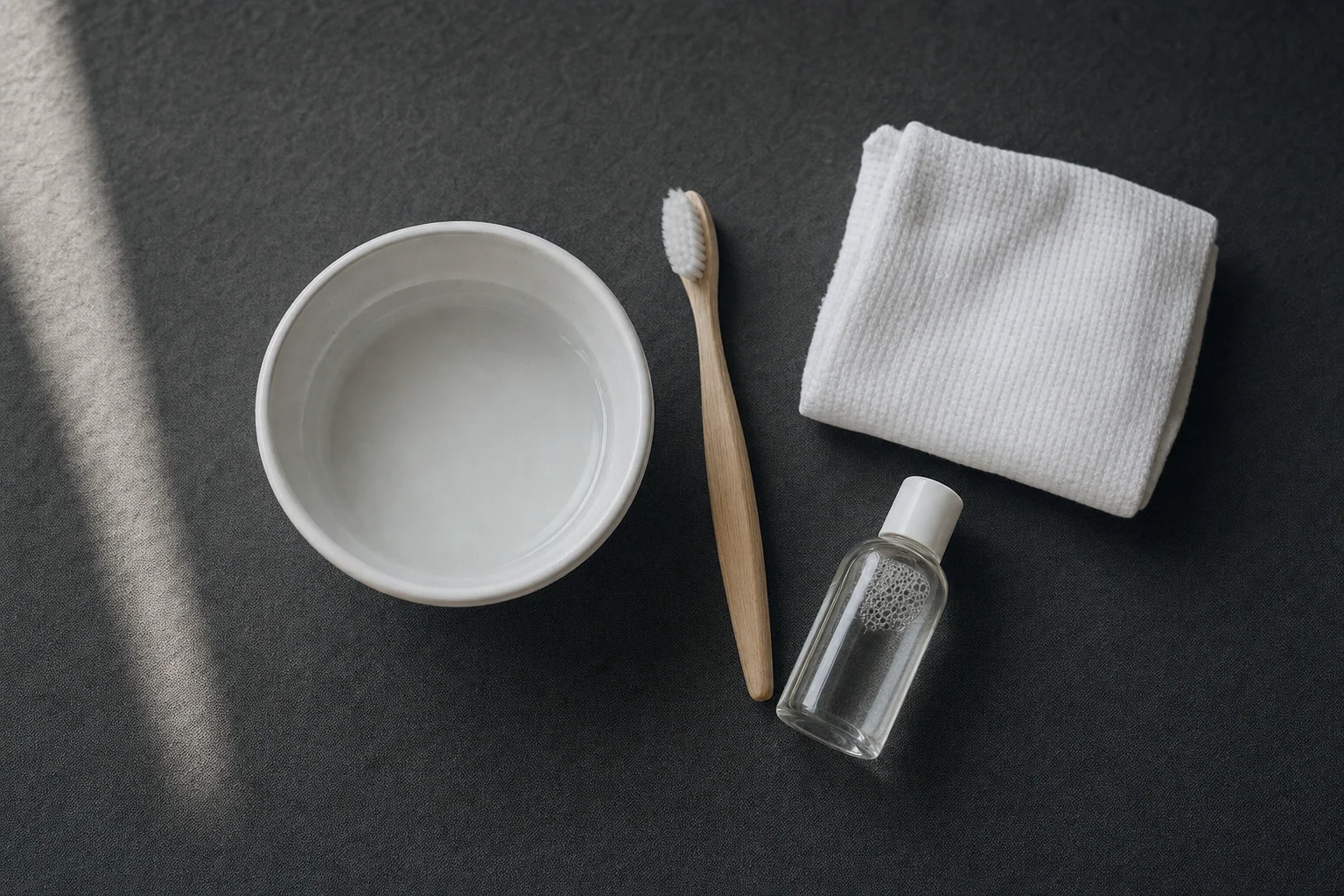
For routine care between annual visits, a gentle home cleaning every two to three weeks is enough. Fill a small bowl with warm — not hot — water and a drop of mild, fragrance-free soap. Let the ring soak for ten minutes. Use a soft-bristled brush (a clean baby toothbrush works) to dislodge any residue from underneath the setting. Rinse with clean water and pat dry with a soft, lint-free cloth.
Avoid commercial jewellery cleaners, especially anything labelled for "all metals" or any product that requires hot water. Avoid ultrasonic cleaners at home — they can loosen the seat of a gemstone in ways that only show up later. If the piece needs more than a soak and brush, let the atelier do it.
Storage.
When the piece is not on your hand, it lives in the ÊTRUNE Box you received at delivery. The box is designed for the piece — protective on the outside, soft on the inside, and made to keep the ring isolated from any other jewellery.
Two rules: keep it dry, and keep it alone. Gemstones can scratch each other and metals can mark each other. The pouch and the case exist to prevent that. If you travel often, the box is built to travel with you.
When to bring it back.
Some signals are clear: a stone that feels loose under the touch of a fingernail, a band that is suddenly tighter or looser without explanation, visible scratches you can feel with your nail, a setting that catches on clothing. Any of these means it is time for a service appointment outside the annual rhythm.
Other signals are quieter: the gemstone looks less bright than you remember, the metal feels dulled even after cleaning, the prongs look slightly bent. Trust the impression. The atelier prefers to look and find nothing than to be told too late.
By stone type.
Diamond is the hardest material in fine jewellery but not unbreakable — a sharp impact at the right angle can chip a culet or facet. Treat it like glass with a perfect score: it survives daily life, not a hammer.
Sapphire and ruby (both corundum) are nearly as hard as diamond but more tolerant of soap and warm water. Routine care suits them well.
Emerald is softer and almost always treated with oil to enhance clarity. Avoid ultrasonic cleaners and any prolonged soaking; the oil can leach out and dull the gem. Wipe with a soft cloth.
Tourmaline (including indicolite) is moderately hard but accumulates static charge — it attracts dust and oil more than most stones. Clean it more often, not more aggressively.
Alexandrite is the most delicate of the celebrated colour-change stones. Avoid heat, avoid impact, and bring it back at the first sign of dullness. The colour-shift behaviour is part of the stone, not a defect — it depends on the light.
“A piece that is cared for between visits is a piece that grows old well.”
When the home guide is not enough, the atelier is here.
Schedule a +Care appointment, or write to us if something does not feel right.