
care
Why Meaningful Rings Need Maintenance
A ring worn every day is in conversation with every day. Why annual care is not optional for fine pieces — and what happens to a ring that goes without it.
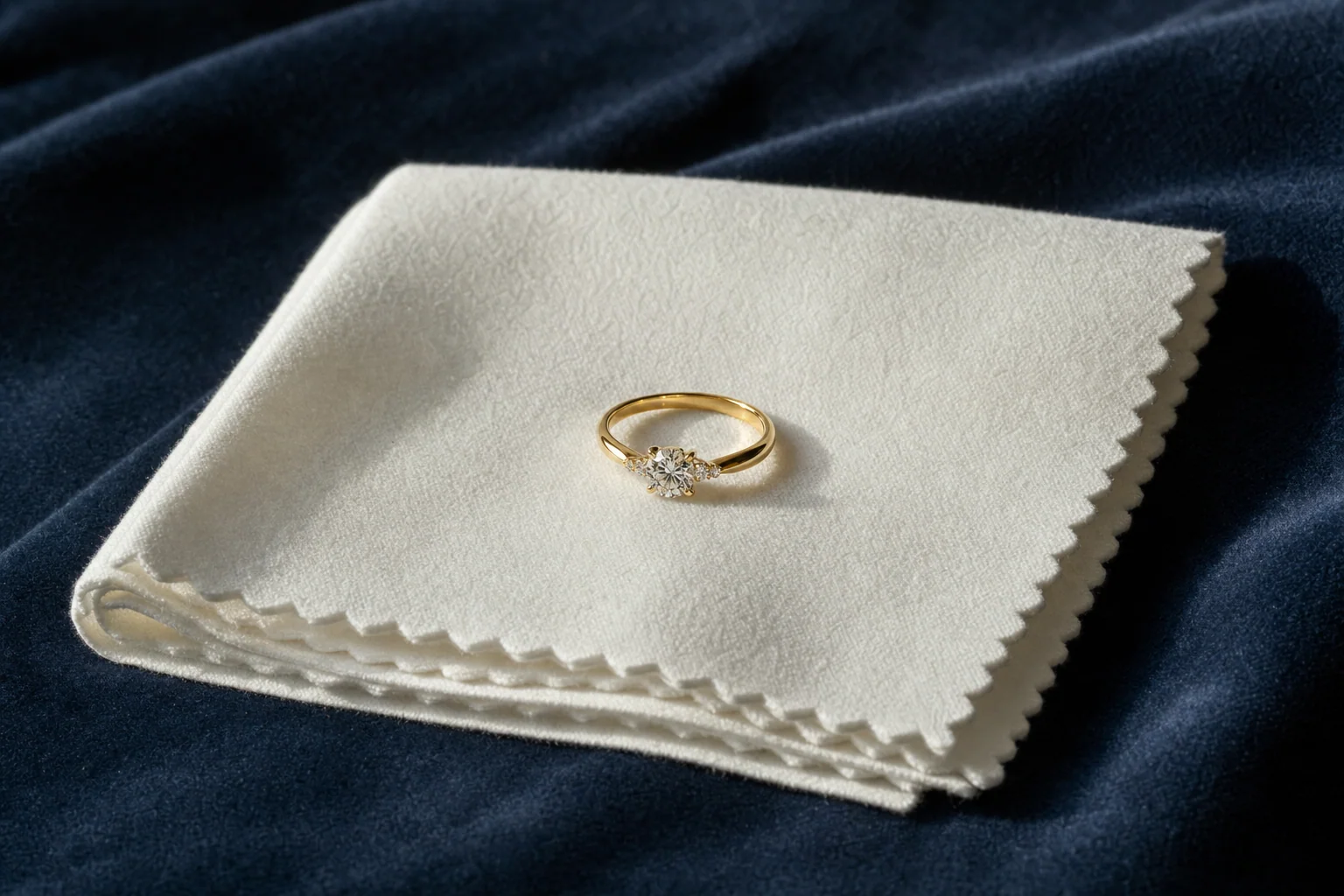
A fine ring lives a hard life. It writes, it cooks, it grips, it presses against doorhandles and laptop edges, it gets washed and rewashed, it travels through hand creams and sunscreens and the small chemical aggressions of a normal day. Nothing about that life is unusual. What is unusual is that the ring is also expected to look, decades later, the way it looked on day one. Bridging those two facts is exactly what maintenance does. This guide explains why an annual care rhythm is not optional for fine engagement rings — and what happens, materially, when one is skipped.
What a year does to a ring
Even with careful daily wear, a year of normal life leaves measurable traces:
The metal surface dulls. Gold and platinum are soft enough that micro-abrasions accumulate. They are not visible individually, but together they scatter light and make the band look slightly less bright than the day it was delivered. Polishing returns the surface to its original reflectivity.
The stone’s setting shifts. Prongs hold a gemstone in place against thousands of small impacts over a year. The metal that grips the stone slowly fatigues. A prong that looked snug at delivery may now be a fraction of a millimetre loose — invisible to the eye, but a problem if uncorrected.
The gemstone collects film. Hand creams, sunscreens, soaps, oils from the skin — all leave residues that lodge at the base of the setting, exactly where they cannot be reached by daily home cleaning. The gemstone keeps its colour but loses some of its sparkle, because light is no longer entering and exiting the facets cleanly.
The band changes size. Fingers swell and shrink over a year due to weight, climate, hormones. A band that fit perfectly in January may slide in July and pinch in December. Resizing returns the ring to the size of the hand.
None of these are dramatic events. They are the quiet weather of an everyday ring.
What a five-year ring looks like, with and without care
Take two hypothetical engagement rings, identical, delivered the same day five years ago.
The first goes to a wearer who brings it in once a year for +Care. After five years: polished surface returning to its original reflectivity, every prong checked annually and adjusted as needed, the gemstone cleaned at the setting interface, the band resized once when life changed, a complete record of every service. The ring looks essentially as it did on year one. The wearer’s risk of losing the stone is near zero.
The second goes to a wearer who never brings it in. After five years: surface dulled in a way that home cleaning cannot reverse, two prongs slightly retracted, one of which is now visibly bent from a hand impact the wearer does not remember, the gemstone cloudy at the base of the setting, the band still a fraction loose since the wearer lost weight two years ago. The ring still looks like a ring, but it no longer looks like the ring that was delivered. More dangerously, the stone is now noticeably less secure than the wearer assumes.
The first ring is on its way to looking, at twenty-five years, the way it looked at year one — a heritage piece in active service. The second is on its way to needing major restoration, or to losing its stone in a moment that will not be predicted.
What a +Care visit actually does
An annual +Care visit is not a single act. It is a sequence:
-
Visual inspection under loupe and microscope. Every prong, every facet, every section of the band — examined for damage, wear, fatigue. Anything that needs attention is logged.
-
Deep cleaning. Ultrasonic and steam cleaning at the atelier remove residues that home cleaning cannot reach. The setting interface, where most film accumulates, gets specific attention.
-
Prong and setting work. If any prong has retracted or bent, it is tightened or rebuilt. If the seat of the stone has deformed, it is reseated. The gemstone is checked for damage that wasn’t there a year ago.
-
Polishing. The band’s outer surface is hand-polished to return its original reflectivity. Engraving, if any, is preserved.
-
Resizing if needed. If the wearer’s hand has changed, the band is resized without affecting the design line.
-
Documentation. Every step is recorded in the ÊTRUNE ID digital record. Photographs are taken before and after. The wearer leaves with a written report of what was done.
The visit takes the ring out of the wearer’s life for one to two weeks, including secured shipping if the wearer is not local to a boutique. Then it returns, restored.
What goes into the cost
The annual +Care fee covers the entire scope above. There are no upcharges for prong work, polishing, resizing, or cleaning. There are no surprise fees when something needs to be done. The wearer pays once per year and receives the full service.
This pricing model exists because we want every wearer to bring the ring in. Variable pricing would create hesitation — people would skip the visit because they were unsure what it would cost. Flat pricing makes the rhythm sustainable.
When +Care is most worth its price
If a wearer treats +Care as optional and skips it for years, the cost of catching up — restoring a long-neglected ring — quickly exceeds what regular care would have cost. We have seen pieces arrive after a decade of no maintenance, and the work to bring them back to standard takes weeks and costs significantly more than the same work spread across ten annual visits.
The economics, like the aesthetics, reward the rhythm.
A short reference
- What changes in a year: surface reflectivity, prong tightness, setting cleanliness, sometimes finger size.
- What an annual visit does: inspection, deep cleaning, prong work if needed, polishing, resizing if needed, full documentation.
- What it costs: one flat annual fee. No surprises during the visit.
- When the guarantee is best preserved: when the program stays continuously active.
- When most damage happens: in the year between when a problem appears and when it would have been caught at the next missed visit.
A ring you love deserves a year that includes a return. Once a year is enough; less than that is not.